The protests were led by “Generation Z” (“Gen Z”), the 15-30 year olds who were born within the digital age—the very generation ANSWER has been educating!
While the developed world is experiencing populist and far-right movements, Gen Z youth are rising up against corruption all over the developing world in Asia (Bangladesh, Sri Lanka), Africa (Nigeria, Senegal, Morocco), and South America (Chile, Colombia, Peru, Mexico)
Nepal’s Gen Z movement exploded with such spontaneity, intensity, and destruction that it toppled the government by day two! It was over before it could be carried live by the international press. It took more than a week before PBS was able to finally cover it https://kcts9.pbslearningmedia.org/resource/gen-z-protests-nepal-video/pbs-news-hour/.
Likewise, there was little coverage of the aftermath—a rash of other Gen Z revolts that swept across Asia: the Philippines, Timor, Indonesia, and Madagascar in the eastern Indian Ocean.
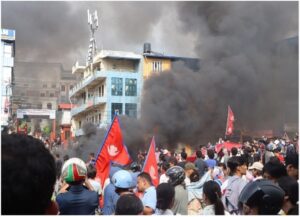 As most of you know from our last two newsletters, in the days preceding Sept 8, 2025, a series of young people’s demonstrations took place against chronic economic stagnation, youth unemployment, wage and social class disparities (“nepo-babies”), and political corruption. These erupted into a full-scale two-day revolt against recent social media bans. On day 2, Sept 9, 2025, as a result of the police killing people the day before, there was so much fervor and hate on the streets that mass violence literally exploded: parliament and a host of government buildings, homes of leading government officials, and two luxury hotels were incinerated.
The prime minister was rescued by the army and abdicated, leaving the President to appoint Nepal’s first woman prime minister Sushila Karki. After consultations with the Army and “Gen Z” representatives, she dissolved Parliament’s lower house, and called for new elections, set for March 5! Nearly 5 months have elapsed and the polling places across the nation are getting ready, political parties have had their conventions, reworked their platforms and nominated their candidates (275 open seats), and the candidates have been out tirelessly campaigning.
—Earle Canfield