Election Day, March 5th, is just around the corner; and all across Nepal, people will be voting for their representative in the Lower House of Parliament. Our students’ future hangs on these results: for several decades mass youth unemployment (~25%), mass migration (>2 million overall with 800,000 labor migration in 2024), mass corruption and nepotism in government have reigned supreme while development and legal reforms have stagnated.
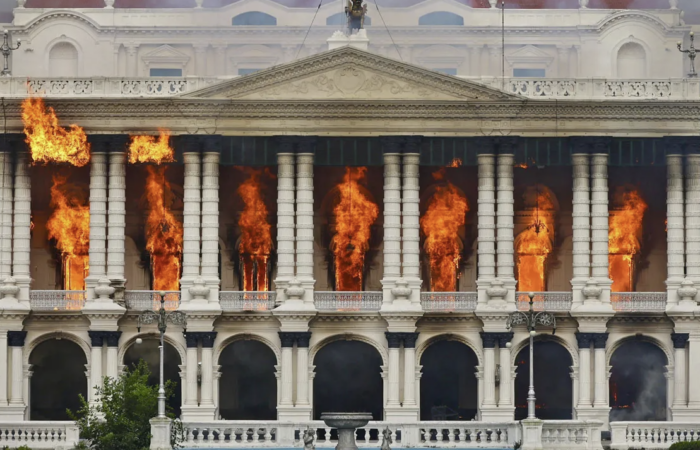
For the past 20 years, the leaders of the 3 major parties (Pushpa Dahal – Maoist, KP Sharma Oli – United Marxist-Leninist, Congress, and Sher Bahadur Deuba) have simply been rotating the premiership amongst themselves, enriching themselves and their friends. The Gen Z Revolt changed all that last September. The major parties are now in crisis trying to repackage themselves while almost 100 new parties have arisen out of nowhere. Of these, 68 parties and 3400 candidates have ultimately succeeded in registering!
It is important to remember that Gen Z is not a political party per se, and that these young leaders are found in almost every party. To overcome corruption in the initial stages will require not just a win, but a resounding landslide on the side of fresh, young leaders who will serve the public vis-a-vis themselves. It is encouraging to know that 30% of these candidates and >60% of the voters are under the age of 40 (800,000 will be voting for the first time).
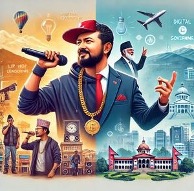 One of the most promising of the new young leaders Is Balendra (“Balen”) Shah who, up until he stepped down a few weeks ago, was the mayor of Kathmandu. His surprising victory in 2022 was unprecedented— first because of his youth (he was just 32) and secondly, he ran as an independent (no party affiliation). Balen began his campaign on the street with “his motorbike and a soap box”, not a chauffeured limousine and yet, he won the mayoral seat of Kathmandu! Although always active in politics, Balen’s popularity came not through party connections, but through his performances as a Rap-singer and would sometimes sing (or “rap”) about the plight of the poor! Who knew it foreshadowed what was to come?
Now as a professional politician, Balen has allied himself with a new political party (the RSP or Independent Party) as its representative of one of the 175 constituencies, and as a likely choice for the Premiership. The RSP itself has an interesting history as it was founded in 2022 and in that election, pulled a 4th place finish behind the 3 major parties…an incredible overnight rise!
Most Gen Z’ers are falling behind Balen and the RSP. But they aren’t the only ones. As the mayor of Kathmandu, he has gained a reputation for cleaning up the city, fighting corruption and winning over a large urban following. But Nepal is largely rural and agricultural.
Balen’s late father, an ayurvedic doctor, was from the highly Hinduized, densely populated are in the mostly poor, rural and agricultural South, the Terai. Early on, he chose to move his family to Kathmandu in order to better educate his children. Balen, in addition to being musically inclined, made his father proud by becoming an engineer. More to the point politically, it seems the family maintained their local language (Maithili) in their home which has given Balen (and the RSP) a distinct advantage over many of the other parties. In fact, Balen’s recent campaign through the Terai was met with surprising success as he due, in no small measure, his fluency in Maithili! In fact, Balen is strategically facing Oli head-on by challenging him for his own constituency in the South (Jhapa-5). If Balen wins there, Oli will be finished and Balen will be in a good position to become the next Prime Minister.
The 3 major party leaders who barely escaped with their lives during the Gen Z protests, now know that the tipping point has been reached and have either chosen not to run (Deuba) or they have repackaged themselves and their parties (Dahal and the ousted Prime Minister Oli). However, Gen Z is determined, people want change, and many more are not going to be fooled again by old wine with new labels.
However, to even begin to address the century-old traditions in Nepal like caste, self-service, and corruption will take more than campaigning and winning an election. Even the Maoists, who fought a decade-long war promising all that time to overturn corruption, were immediately corrupted once in power.
Now, however, in the last days before the election, citing allegations of financial irregularities and lack of transparency within the RSP has surfaced. A host of top leaders in the RSP have been resigning (including the RSP founding member in the Terai)! Trust in the RSP is eroding, and Balen needs to address it.
Nevertheless, Balen is the great hope for Gen Z, and should he and the RSP win and succeed in addressing corruption, then the question becomes “Where will Nepal find an ample number of leaders who will fight corruption, understand the poor, and truly serve the people?” Ahaa! Therein lies (the) ANSWER.
Be sure to follow the March 5 election results on March 5 (because of the International Dateline, Asia is one day ahead of the USA—March 5 here will be March 6 there!) You can follow the results in the daily Kathmandu Post online (www.kathmandupost.com). Also, for those who have older students (Gen Z) and are communicating by email with your student, you can immediately surprise them with what you know!
—Earle Canfield