From our inception ANSWER has recognized that caste and “caste entitlement” goes against democratic ideals and hand in hand with government corruption. Thus, we have consistently been advocating for and active in “peaceful change through education and service.” Here is a historical perspective as testimony of this contribution.
Truth be told, undercutting the caste system in Nepal was one of the foundational hopes Mary Jane and I had for ANSWER when we set out twenty-five years ago pitching educational sponsorships to our friends, church members, and all of you. We made it a point that we wanted to serve the “poor and needy of all castes”, not just the low caste. Although low caste families are almost always poor, there are bright and impoverished children of all castes; and in order to undercut the caste system, we decided to bring together young people of all castes so long as they were poor. In like manner, we also wanted to bridge the wide gender divide in Nepal, and we felt the better way to do that was to include bright, disadvantaged boys along with the disadvantaged girls. Although open to take any child who was poor and bright, we weighted it more towards low caste and female.
Never in our wildest dreams did we think that we would see much of an impact on Nepali society in our lifetime. But Nepal was ripe for change, and in Life and as in Politics, Timing is Everything.
ANSWER would never have gotten off the ground had it not been for a courageous principal of a private school in Kathmandu. Mr. Gurung (“Gurung-ji”) of Neelgiri English Medium School took the risk to his school’s reputation when he began accepting our low-caste kids. Four years before we officially became an NGO, Gurung-ji welcomed our first ANSWER student Uma (who was peddling cigarettes two blocks away) into his school, and the next year it was Nagpo (a Sherpa boy from a remote mountain village). After 2001, a significant portion of Neelgiri School’s student body were ANSWER students! How did this come to pass? — People to People! On my first visit in 1994, Gurung-ji voluntarily tutored me afterhours in Nepali, so we became good friends. Subsequently, on her first visit, he took in Mary Jane as a volunteer instructor for Neelgiri’s teachers.
After the year 2000, private schools had proliferated and “maxed out”, as supply (private schools) outstripped demand (rich families who could afford to pay). This forced principals to open their private schools to whomever could pay. Then came the “Civil War” (1996-2006), and the Maoists, first by force and later by agreement, came to elicit further concessions from private schools: to guarantee a portion of seats for poor students. This meant that the principals would have to concede tuition waivers to their poor students and absorb the cost! This set up a win-win situation in which ANSWER could partially relieve these principals of that financial burden by covering the tuition of the brightest of the poor in cities and towns. Thus, we were able to expand beyond the Kathmandu Valley and access the entire nation. Timing is everything!
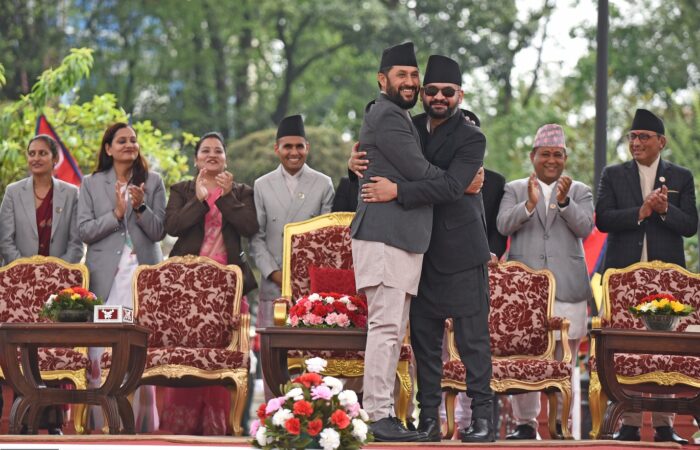
ANSWER’s growth and the anti-caste trend continued hand in hand after the war. In 2006, under a new government led by the Maoist Party, Nepal declared itself to be an “untouchability-free nation.” In 2011 this was reinforced with the Caste-Based Discrimination and Untouchability Act. Finally, in 2023, 24 people were given life sentences for killing 6 Dalit youths in the “2020 Soti Incident.” Caste is still a big hindrance to equality and justice, but step by step, the change is happening. The recent apology to people of the untouchable caste by RSP Chair Lamichhane immediately following the 2026 election carries the additional weight in his words “secured by justice.”
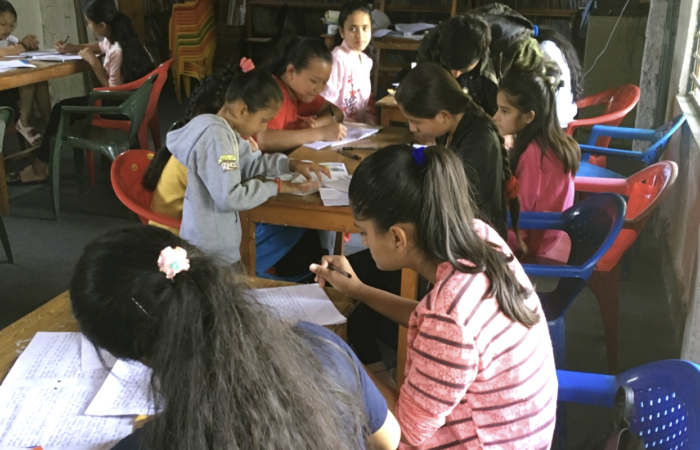
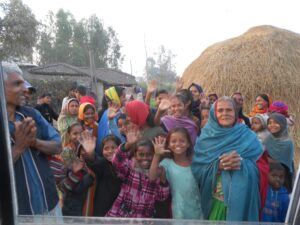 Among some ethnic groups, Nepali girls are not educated, leaving us in a quandary, “Do we just vet boys?” In the village in the photo, we couldn’t find any girls in school. So, we simply offered to provide paper and pencils to Madeshi girls if they would go to school. It was an offer their parents couldn’t resist – an indication of just how severe was their poverty! Even we were surprised to see that almost all the girls of the village were enrolled and attending public schools when we returned. Before long, some mothers felt that they had been cheated out of an education!
In addition to timing, we now use the very criteria for admission and hiring which reinforces the caste system to our advantage. ANSWER students attend private schools and learn to compete aside-by-side with their well-to-do-peers. With equal education, we have found that our disadvantaged students gain the advantage since they are more motivated to study, and test-taking has come to be their forte. The result is that more and more of our graduates are passing the government exams and finding well-paying, secure government positions.
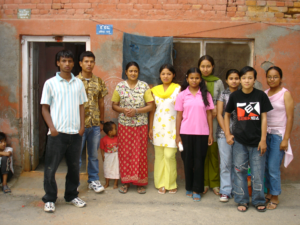 Social action and community service became a part of our educational mission within a few years of our formation (2001). Mary Jane initially put together a contingent of our high-schoolers to help clean out a student’s home overrun with mildew, mold, and grime. This group became known as the Social Welfare Club (SWC), and was soon socializing and assisting the elderly in a nursing home. Before long they were painting a small kitchen that fed street children.
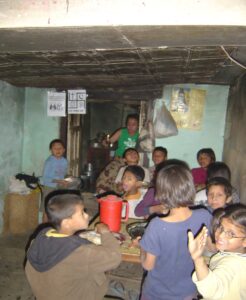 Helping others is almost a foreign concept to the poor, since they exist in “survival mode.” We wanted to show them that serving others is commonly practiced by others and is rewarding in itself. In addition to helping others, we showed movies with social service themes and conducted discussions about these themes: films like The Blind Side, Born into Brothels, Nemo, Gifted Hands, and Pay It Forward…the last one was taken on as ANSWER’s byline. Kids love movies, of course, but to discuss them was a new experience for all of them since nowhere in their rote schooling and seldom at home, had anyone asked them what they thought. Even the timid, esp. shy girls, would raise their hands and contribute their thoughts. Once a speaker, commented to me after a Q & A session with AAA, “These are not Nepali students. They ask too many questions!” I laughed and said, “They learned to speak up in SWC; they do us proud!”
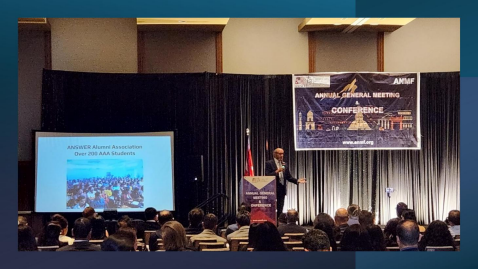
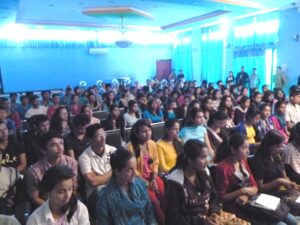 Well, by 2012, many of our students were in college, and we formed an additional social action group with them, AAA (the ANSWER Alumni Association). In lieu of movie discussions, live speakers were invited to address the students about the real social needs all around them. They responded and dreamed up their own social action projects, from donating blood and painting and renovating government schools, to rebuilding homes destroyed by the earthquake. In fact, the reconstruction of earthquake-damaged homes evolved out of a AAA project we learned about when they approached us to buy corrugated aluminum sheets to roof a mud-and-wattle house they were building to replace a condemned home of one of their classmates! Their initiative constantly amazes us, as they seem to be two steps ahead of us when we are stymied.
Mary Jane passed away ten years ago; but on the last of her dozen trips to Nepal, she worked alongside our students building a house after the earthquake and realized by then that the impossible dream was truly coming to pass: our students had melded into brothers and sisters working hand in hand regardless of caste or gender.
 While building homes from the ground up with building supplies bought with the generous donations of our sponsors, they (AAA) joined forces with some young people of SOCH Nepal (Nepal’s only atheist organization) to hold a flash dance and street drama addressing poverty in the city’s prime tourist area.
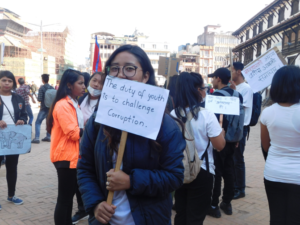
The next thing I discovered was that they were demonstrating in the streets with signs and placards against government corruption! Everyone in Nepal knows how ingrained corruption is in government (and society as a whole), but this demonstration was the first time I had ever seen or heard of anyone trying to address it and publicly protesting! This was in 2017: eight years before the Gen Z movement took it on! Perhaps with this demonstration, AAA planted a seed which took root and bloomed into the Gen Z movement? After all, Gen Z is none other than the generation we have been educating for the last 15 of our 25 years! Was it a mere coincidence that the Gen Z movement and ANSWER’s Silver Jubilee coincide? Was there a connection? Or was it simply timing?
The role Covid played in fomenting the 2026 Gen Z Revolt has been overlooked. Recall that everyone was isolated—the airport shut down; tourism and trekking ceased, hotels and restaurants closed, businesses failed, people were laid off and schools shut down; and the people struggled to survive.
In my mind, the pandemic put the lid on a pot of desperate people who were now beginning to stew. All the while, the government appeared indifferent. The people began to openly complain and look for new leadership. By 2022, as the pandemic was waning. The government had proven to be totally ineffective: building codes violated; garbage piling up in the streets; and with evictions, squatters were everywhere.
But, out of nowhere, a rap singer named Balen Shah emerged, aligned with the poor, and without any party affiliation (unheard of!), promised to clean up the city and its government. In a surprising victory, he was elected Mayor of Kathmandu. At the same time a new political party, the RSP, had formed and entered the political arena, challenged the establishment, and openly addressed the issues. The RSP took an impressive 10% of the national seats among a field of parties.
Even so, the government, rather than creating jobs, simply encouraged young men (educated but without jobs) to go abroad to work as indentured migrant workers or high-paid mercenaries in foreign wars. Social unrest began to grow: families became single-parent, villages lost their manpower, and the dead bodies of young men (killed in wars or job-related accidents) began returning in boxes. As things grew worse, the disillusioned youth (Gen Z) began communicating through social media, exposing the corruption and wealth of the government officials. Finally, the stew that was simmering came to boiling; and under ever-mounting pressure, it boiled over in September 2025, as the young people erupted in protest and flowed onto the streets, bringing down the government on Sept 5, 2025.
While the officials were getting richer doing nothing, Balen Shah and the RSP were getting things done, and they subsequently merged forces in the face of new elections. By June, the older generations joined Gen Z in voting out the old guard and voting in the new. The RSP won nearly two-thirds of the Lower House and Shah became the new Prime Minister.
Yes, Gen Z, with their cell phones and social media deserve credit, but don’t forget TIMING! Over ANSWER’s 25 years in Nepal, we have witnessed not just the spread of technology (especially, communication), but the growth of universal education, the admission of low caste students into private school (supported by NGOs), and their resulting empowerment!
Thanks to all of you, our sponsors! You have done more than just educate a student. Categorically, I can state ANSWER had no direct part in calling for a protest last September. But that student who went to college, who built a house, who raised the public consciousness, who stirred the pot, that boiled over into a movement, that erupted onto the streets, that brought down a corrupt government, that swept an election, may well have been the very seed that you planted! After 25 years, ANSWER’s vision of bridging the gender gap, upending the caste system, and democratizing a corrupt oligarchy is in the offing. What will come of all this remains to be seen, but HOPE HAS BEEN RESTORED, and HOPE WILL PREVAIL—so long as more highly educated young leaders continue to emerge each year.
Earle Canfield